Learning that the driver who caused your accident has died can leave you wondering whether your claim just evaporated along with them. It’s a stressful, confusing moment on top of an already difficult recovery, and misinformation online can make it worse. The good news is that in most cases, your right to compensation does not disappear just because the at-fault driver has passed away. Understanding how the claims process shifts after a death can help you protect your rights and avoid costly delays.
How Insurance Coverage Still Applies After Death
When an at-fault driver dies, their auto insurance policy typically remains active for claims arising from accidents that occurred before their death. The insurance company is still obligated to investigate the crash and pay out valid claims up to the policy limits, regardless of the driver’s passing. This means your claim doesn’t automatically vanish, but the process for pursuing it does change in some important ways.
The biggest shift is that you’ll likely be dealing with the deceased driver’s estate rather than the driver directly, even though the insurance carrier remains the primary source of payment. This can add extra steps, paperwork, and sometimes delays while the estate is formally opened through probate court.
- The insurance policy limits still apply and don’t increase because of the driver’s death
- Claims must generally be filed within the same statute of limitations as before
- The insurer may request a death certificate and probate documentation
- Multiple claimants from the same accident may need to share available policy funds
Filing a Claim Against the Deceased Driver’s Estate
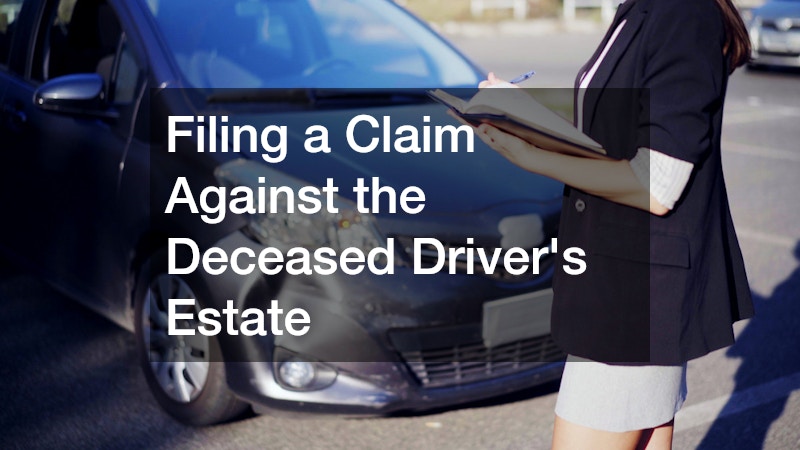
If the insurance settlement doesn’t fully cover your damages, you may need to file a claim directly against the deceased driver’s estate. This involves notifying the executor or personal representative of the estate and submitting a formal claim within the deadline set by your state’s probate laws, which is often just a few months after the estate is opened.
Estates can be complicated, especially if the deceased had limited assets or if multiple creditors are competing for a share. It’s worth noting that probate claims operate on a different timeline than typical insurance negotiations, so missing a probate filing deadline could mean losing your chance to recover anything beyond the insurance payout.
- Contact the probate court in the county where the deceased resided to check estate status
- Submit your claim in writing with supporting documentation of your damages
- Be aware that estate assets may be limited, especially if there’s no life insurance or savings
- Understand that other creditors, including medical providers, may also file claims
Working With the Executor or Personal Representative
The executor, sometimes called a personal representative, is the person legally responsible for managing the deceased driver’s estate. This individual reviews claims, pays valid debts, and distributes remaining assets to heirs, which means they play a direct role in whether and how your claim gets resolved. Communication with the executor is usually more formal than dealing with an insurance adjuster, often requiring written correspondence and adherence to court procedures.
An auto accident attorney can help you understand exactly what documentation the executor needs and can communicate on your behalf to keep the process moving. Because executors are juggling multiple responsibilities and often multiple creditor claims, having someone experienced in these situations can prevent your claim from getting lost in the shuffle or dismissed on a technicality.
- Request confirmation that your claim has been received and logged
- Keep copies of all correspondence with the executor or their attorney
- Ask about the estate’s expected timeline for resolving claims
- Follow up regularly, since probate cases can move slowly
Special Considerations When the Death Resulted in a Fatality Claim
Sometimes the at-fault driver’s death happens in the very accident that also injured or killed someone else, which creates a more complex legal situation involving two potential estates. If you lost a loved one in the crash, you may be entitled to pursue a claim for both your injuries and the loss of your family member, depending on the circumstances. These cases often involve overlapping insurance policies, estate claims, and strict filing deadlines that vary by state.
A wrongful death lawyer can help sort out who is entitled to compensation, how damages are calculated, and which parties or policies are responsible for payment. Because these cases often involve grieving families navigating both personal loss and financial hardship, having clear legal guidance can make an emotionally difficult process more manageable.
- Wrongful death claims typically cover funeral costs, lost income, and loss of companionship
- Only certain family members, such as a spouse or children, may have legal standing to file
- Deadlines for wrongful death claims are often separate from personal injury deadlines
- Compensation may come from multiple sources, including umbrella policies
Steps to Protect Your Claim Right Away
Regardless of how complicated the situation seems, there are practical steps you can take immediately to protect your right to compensation. Acting quickly helps preserve evidence and ensures you don’t miss critical deadlines tied to either the insurance claim or the probate process. Waiting too long can weaken your position, especially if records disappear or witnesses become harder to locate.
A car accident lawyer can guide you through gathering documentation, communicating with insurers, and determining whether you need to file a probate claim in addition to an insurance claim. Having professional support early on often makes the difference between a smooth resolution and a drawn-out dispute over compensation.
- Obtain a copy of the police report as soon as it’s available
- Notify the at-fault driver’s insurance company promptly, even after their death
- Keep detailed records of medical treatment, repair costs, and lost wages
- Ask about the deadline for filing a claim against the estate
The death of an at-fault driver adds real complexity to an accident claim, but it doesn’t automatically close the door on the compensation you deserve. By understanding how insurance coverage, probate deadlines, and estate claims interact, you can take informed action instead of losing time to confusion. If your situation feels overwhelming, reaching out to a qualified legal professional can help you navigate the process and protect your rights moving forward.